
What are the acronyms used below?
SSF- Strontian Solar Farm
DPHI- NSW’s Department of Planning, Housing & Infrastructure
EIS- Environmental Impact Statement
VIA- Visual Impact Assessment
How much land does the project cover
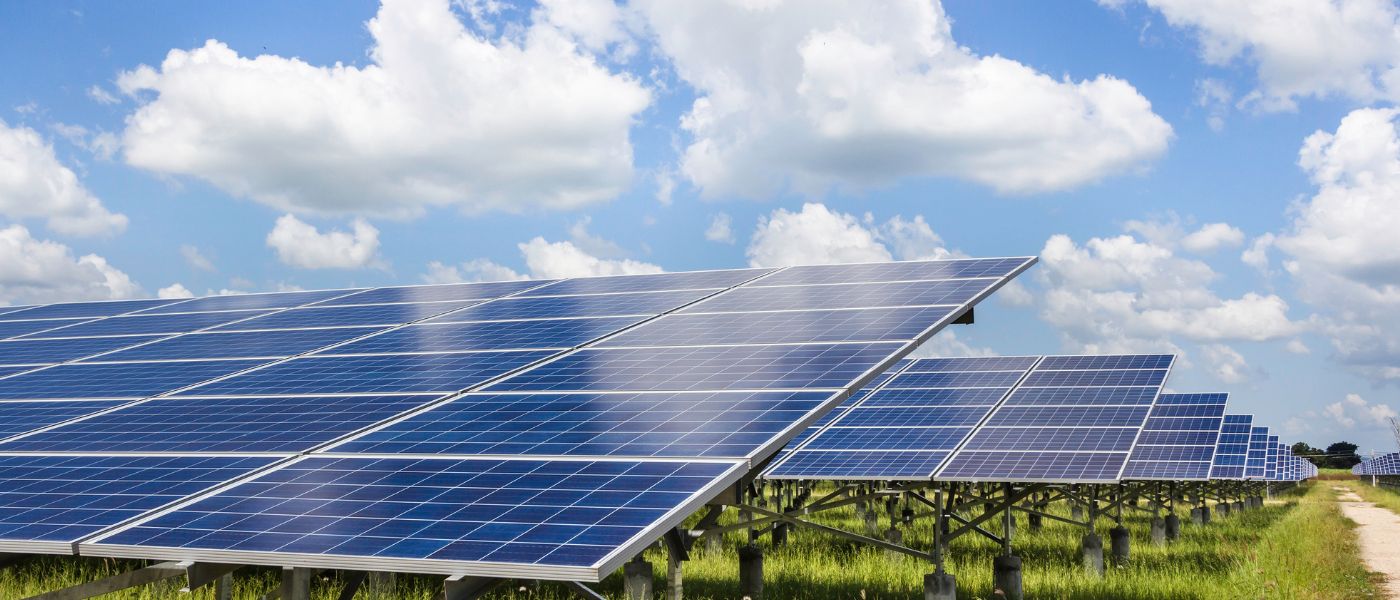
The project has a disturbance footprint of ~670ha across the two hosting properties, which includes native vegetation plantings , onsite access tracks, some ancillary infrastructure, managed asset protection zones and fields of PV arrays.
The majority of the disturbance footprint will remain as pasture interspersed with rows of PV panels mounted on tilt axis at 5-10m gaps, depending on panel orientation, allowing for sheep grazing and vegetation management between and underneath panels.
Why was this site chosen for the Project?
After undertaking extensive investigations into suitable sites across Eastern Australia, SSF was chosen based on several criteria, including:
• optimal solar resources
• the availability of suitable land
• proximity to electrical loads
• minimal impacts to the project and surrounding lands
• access to grid connection with sufficient connection capacity
• community support for renewable energy projects
• existing land use quality and the capacity to rehabilitate post-decommissioning.
Is the Project permanent?
The project is expected to operate for approximately 30 years; at this point the Project will be decommissioned, or further assessment will be completed and approvals sought to extend the project’s life. Any assessment would involve discussions with Landowners, the Community, Local & State Governments, and business and special interest groups. If an extension to the project’s life is sought, it would only occur after the above consultation and approvals from any required Government departments.
Under what guidelines/regulations will the project be assessed?
The SSF has State Significant Development status with Secretary’s Environmental Assessment Requirements (SEARs) received in October 2025. A project specific EIS is currently being completed with an anticipated submission date of early 2026. It will then be assessed under the Environmental Planning and Assessment Act 1979 (EP&A Act), Environmental Planning and Assessment Regulation 2021 (the EP&A Regulation), State Significant Development Guidelines (SSD Guidelines), and the Renewable Energy Planning Framework, including the Large-Scale Solar Energy Guideline (DPHI, 2022)
Who is the consent authority for this project?
Generally, the NSW DPHI are the consent authority for large-scale renewable energy projects in NSW.
How long will construction take?
Construction of the solar farm is expected to be completed in 18-24 months, with a peak construction period of 12 months.
Do solar farms make noise?
Building a solar farm can be noisy during specific periods of construction. This is mitigated by work only being completed during regular working hours. Work outside these hours will be assessed on a case-by-case basis and can only occur if acceptable noise levels are maintained.
During operation, the solar farm is expected to make some noise. A noise assessment has been completed as part of the EIS, which has found that no receivers will be subjected to noise above allowable limits.
What environmental and cultural heritage factors will be assessed as part of the project?
As part of the EIS for the project, detailed assessments and reports will be compiled on the below, while also addressing other potential concerns throughout the EIS:
- Biodiversity
- Visual Impact
- Glint & Glare
- Social Impact
- Aboriginal and cultural heritage
- Hazards
- Hydrological & Hydraulic
- Noise & Vibration
- Traffic
- Others to be specified by DPHI
How will hazards such as fires be managed during the project?
While there is no inherent fre risk associated with solar farms, the project will have improved all weather access and managed asset protection zones surrounding the panel areas and facilities. All onsite activities will be in accordance with Federal, State and Local Government laws and requirements.
The detailed proposed draft conditions of consent reflect detailed and specifc SSF commitments in the EIS to safe operating conditions and for working with Fire and Rescue NSW and the local Fire Control Centre to prepare a Fire Safety Study to inform the development of a comprehensive Emergency Response Plan to address the management of hazards during construction, operations and decommissioning.
Will drones be used on-site?
Occasionally drones will be used to complete infrared scanning of the project. This is part of the operation and maintenance procedures. The drones will only fy and take images within the project footprint.
How many jobs will be created?
SSF is expected to provide up to 200 jobs during peak construction periods, and 4-5 full-time jobs
during its operational life.
How will visual impacts be addressed?
A VIA was completed as part of the EIS, which has determined the project to have a low visual impact. This has been done using DPHI’s current large-scale solar guidelines. The VIA shows the potential visual impacts associated with the project, as well as a proposed landscaping treatments to break up views of the solar farm.
Project amendments have been made throughout the development process to further minimise potential visual impacts.
How will the local community benefit from this project?
SSF is committed to working with the local community and special interest groups to advance various environmental, social, and educational issues. This will be done through the community enhancement fund, where each year, funds will be made available to various groups to enhance the local area surrounding the project.
What happens at the project’s end of life?
Decommissioning and rehabilitation of the site would be undertaken at the end of the Project’s useful life. The decommissioning process is a critical part of the development application process, and a decommissioning plan must be prepared at prescribed times for endorsement.
Decommissioning would aim to return the land as close to its preconstruction condition as possible. The site would be left suitable for its existing agricultural or suitable alternative land use. Baseline soil mapping collected prior to construction would be used to verify the site has been returned to its existing (or better) land capability.